What We Do
Collaborative, disease- and location-specific human brain tissue repositories where each piece of tissue is clinically and anatomically linked to its molecular and cellular substrates enabling investigators to identify drug targets and biomarkers.
Program
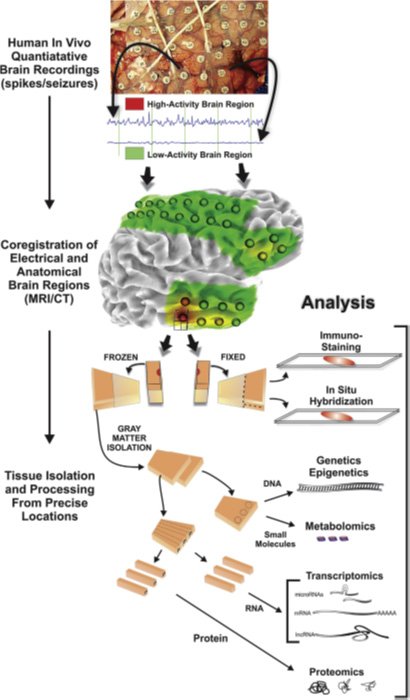
Epilepsy is a life-long disease of recurrent seizures where surgical resection of specific brain regions can greatly reduce seizures. Our human epilepsy collection includes thousands of brain samples from hundreds of patients undergoing epilepsy surgery.
Each piece of tissue is meticulously linked to imaging, in vivo electrical recordings, and extensive clinical data in a platform we call Intuition. Downstream studies have revealed the abnormal wiring of the epileptic brain and the molecular and cellular pathways involved leading to novel therapeutic targets and biomarkers. Through a UG3 grant from the NIH, Intuition-Epilepsy Surgery has expanded to four additional sites linked through a federated network.
Program
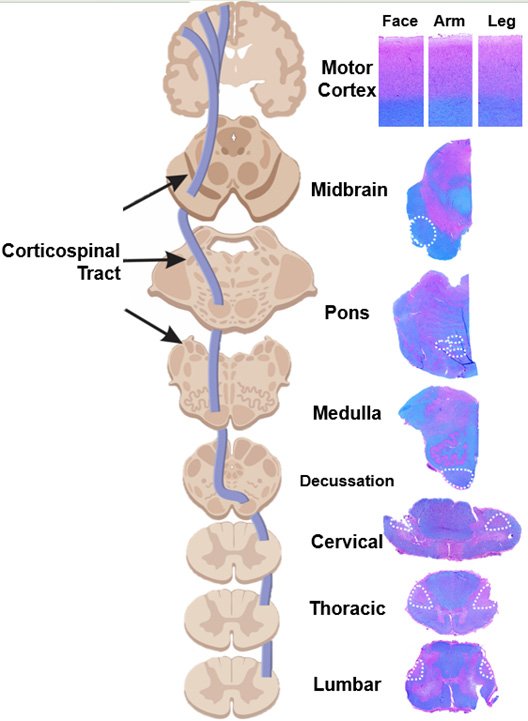
Amyotrophic lateral sclerosis (ALS) is a devastating and fatal disease of muscle movement. We run a rapid autopsy program that collects tissue within 3 hours of death critical, because waiting longer produces many changes solely due to the postmortem interval (see our work on the "Zombie Gene" ).
As in our epilepsy studies, each tissue sample is linked to imaging, histology, omics, and clinical disease progression. This has led to novel discoveries about the relationship between the brain and spinal cord in ALS, and a potential role for nerve injuries in triggering the location of disease onset and the rate of spread. Because of the strong association between ALS and professional athletes, we maintain a long-standing relationship with the Patrick Grange Foundation.
Program
Using the same spatially linked tissue sampling approach and database structure we developed for epilepsy, we collect brain tumor samples at specific brain locations linking brain imaging, histology, genomics, and a complete clinical database through the same federated network.
More Programs & Cores
Highly collaborative studies on the Blood-Brain Barrier, Multiple Sclerosis, vascular malformations, and Alzheimer's Disease.
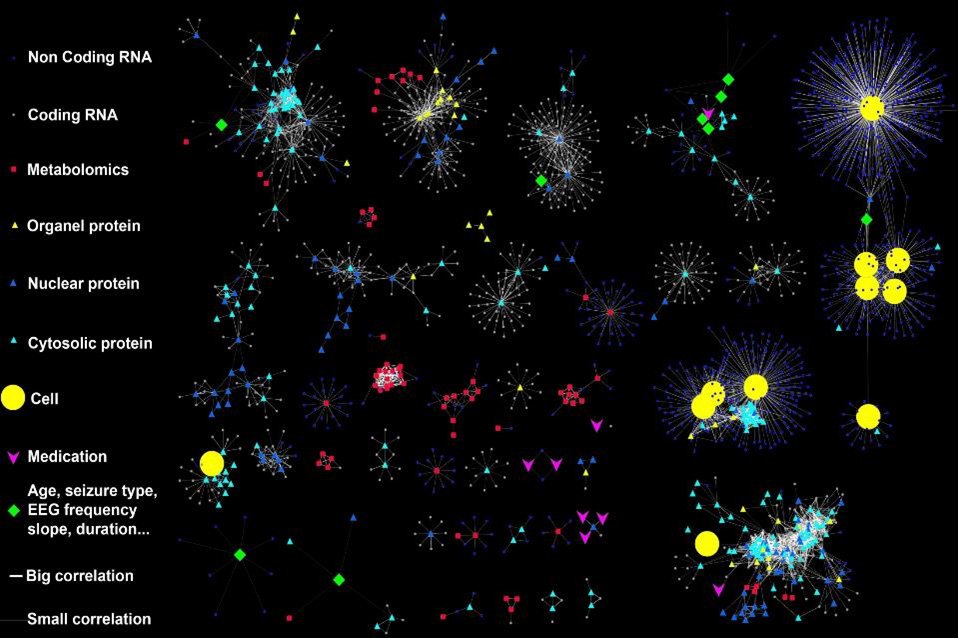
Genomics, gene expression, proteomics, and metabolomics linked to imaging, electrical signaling, histology, and clinical data. Led by Fabien Dachet, PhD identifying brain "microlesions" in epilepsy and linking coding and non-coding gene expression.
The brain is a highly complex electrical organ. Our pioneering signal processing linked to quantitative image analysis led by Biswajit Maharathi, PhD also drives development of Intuition and ADRESai.
Clinical Translation
We commercialize discoveries through intellectual property, copyrighted software, and AI-ready integrated datasets in collaboration with industry and university startups. Successful translation has the potential to generate significant royalties to the University. Current trajectories include:
We collaborate with academic and industry researchers across epilepsy, ALS, brain tumors, Alzheimer’s, MS, Blood-Brain Barrier and aging, Sturge-Weber Syndrome, and neurocysticercosis.
Start a collaboration